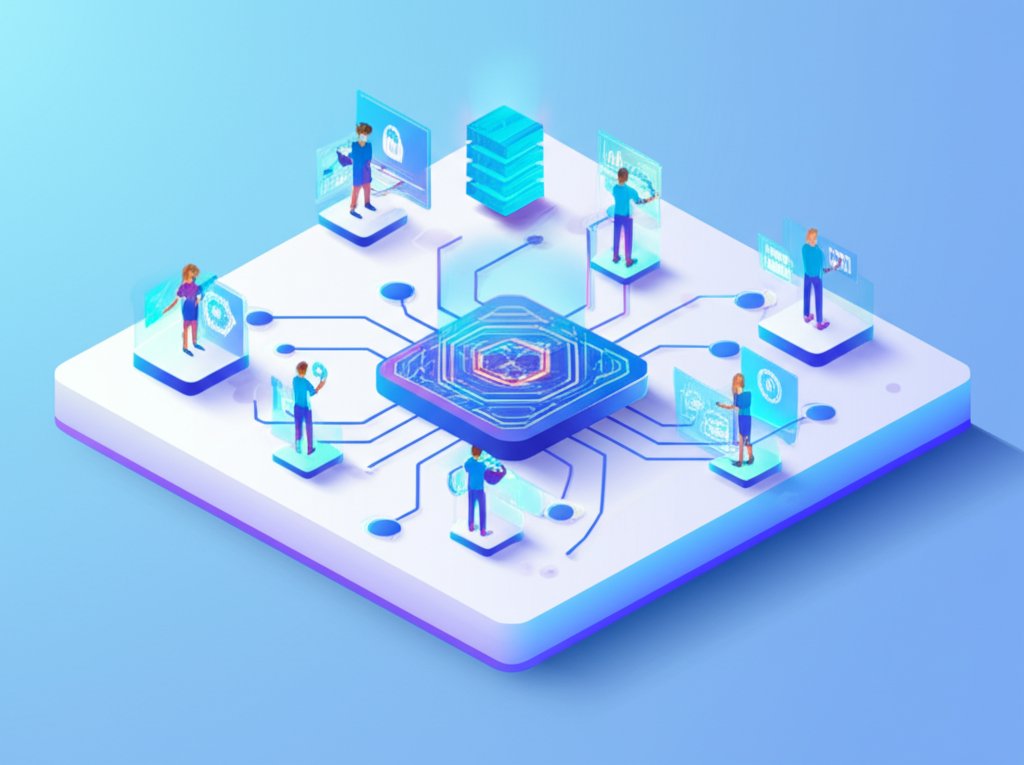
The digital asset landscape often feels like a sprawling, complex universe, yet at its heart are powerful tools designed for specific purposes. When we talk about utility crypto, we're not just discussing digital money; we're delving into digital assets that serve as functional keys, opening doors to specific products and services within a blockchain ecosystem. These aren't simply speculative assets; they are essential components, defining how users interact with and benefit from decentralized applications and platforms.
At a Glance: Navigating Utility Crypto

- Core Function: Utility crypto grants holders access to specific products, services, or features within a decentralized ecosystem.
- Key Distinction: Unlike traditional cryptocurrencies meant as money, utility assets are purpose-built for interaction, not primarily for general exchange.
- Coins vs. Tokens: "Coins" run on their own native blockchain (e.g., Ethereum itself), while "tokens" are built on existing blockchain ecosystems (e.g., ERC-20 tokens on Ethereum).
- Diverse Applications: Their functions range from paying transaction fees, enabling governance, providing access to premium features, to securing networks through staking.
- Investment Nuance: Investing in utility crypto is fundamentally a bet on the success and adoption of the underlying project, not equity ownership in a company.
- Risks & Rewards: While offering potential for value appreciation linked to ecosystem growth, utility crypto carries significant risks like project failure, regulatory uncertainty, and market volatility.
Unpacking the Purpose: Why Utility Crypto Exists

At its core, utility crypto represents a digital asset designed to be consumed or used for a specific function within a decentralized application (dApp) or blockchain network. Think of it less as a dollar bill and more as an arcade token, a club membership card, or a gas voucher for a specific type of vehicle. Its value is intrinsically tied to the utility it provides within its native ecosystem.
These assets emerged as a fundamental mechanism for projects to fund development, incentivize early adoption, and create self-sustaining economies. By offering a digital key to future services, projects can gather capital and build a committed community from the ground up, aligning user interests with the platform's success.
Utility Coins vs. Utility Tokens: Understanding the Blueprint
While often used interchangeably, there's a crucial architectural difference between utility "coins" and utility "tokens":
- Utility Coins: These operate on their own native blockchain. They are the fundamental unit of value for that specific network, often used to pay for transaction fees (gas) and secure the chain.
- Example: Ethereum (ETH) is the native coin of the Ethereum blockchain. It's used to pay for gas fees for all transactions and smart contract executions on that network, including those involving thousands of ERC-20 tokens.
- Example: XRP, the native asset of the Ripple network, serves as a bridge currency for fast, low-cost cross-border payments directly on its own ledger.
- Utility Tokens: These are built on top of an existing blockchain ecosystem, leveraging its infrastructure and security. They adhere to specific technical standards (like ERC-20 on Ethereum) that define how they interact with the underlying network.
- Example: Binance Coin (BNB) originated as an ERC-20 token on Ethereum before migrating to its own Binance Smart Chain. It is still often referred to as a token in its utility context for reduced trading fees on Binance exchange.
- Example: Basic Attention Token (BAT) is an ERC-20 token on Ethereum, designed to reward users for their attention on web content within the Brave browser ecosystem.
This distinction is more than technical jargon; it impacts network dependencies, security models, and how the asset is created and distributed. While coins can be "mined" (if the chain uses Proof of Work) or issued via staking rewards (Proof of Stake), utility tokens are typically created all at once by the project developers and then distributed, often through a public offering.
The Initial Coin Offering (ICO): A Genesis Moment
Many utility crypto tokens were first introduced to the public through an Initial Coin Offering (ICO). This fundraising method is akin to an Initial Public Offering (IPO) in traditional finance, where a company sells shares to the public to raise capital. In an ICO, a blockchain project offers its newly minted utility tokens for purchase by the public, typically in exchange for established cryptocurrencies like Bitcoin or Ethereum.
The ICO model allowed early-stage projects to bootstrap development and gather a community of vested users. Buyers weren't acquiring equity in a company but rather gaining early access to the services their tokens would unlock, hoping the token's value would appreciate as the platform grew. This model, while revolutionary for fundraising, also brought forth regulatory challenges due to the speculative nature of many offerings.
How Utility Crypto Powers Ecosystems: Core Functions & Examples
The real power of utility crypto lies in its diverse functional applications, which are critical for the operation and value proposition of many blockchain projects. These functions go beyond simple payments, creating intricate relationships between users, platforms, and services.
Accessing Premium Features and Exclusive Content
One of the most straightforward utilities is granting holders preferential access. This can manifest in several ways:
- Entry to Services: A token might be required to use a platform's core service, like paying for decentralized storage space with Filecoin (FIL).
- Premium Features: Holding a certain amount of a token could unlock advanced analytics, faster transaction processing, or exclusive content within an application.
- Membership Privileges: Some tokens act as digital membership cards, offering discounts or priority access to events, communities, or beta programs.
- Example: While not explicitly listed as "access" in the ground truth, tokens like Shiba Inu (SHIB) evolve. Originally a meme coin, SHIB now functions as the primary currency for buying virtual land in its metaverse, effectively granting "access" to participate in that digital world.
Facilitating Payments and Transaction Fees
This is perhaps the most common and foundational utility. Many crypto assets are designed to be the medium of exchange within their specific ecosystem.
- Network Gas Fees: The most prominent example is Ethereum (ETH), which is essential to pay "gas" for every transaction or smart contract execution on the Ethereum network. Without ETH, you can't interact with decentralized applications (dApps) built on Ethereum.
- Platform Service Fees: Binance Coin (BNB) is used to pay for transaction fees on the Binance Smart Chain and also offers reduced trading fees on the Binance exchange, incentivizing its use by traders.
- Cross-Border Remittances: XRP and XLM (Stellar Lumens) act as "bridge currencies." They facilitate rapid, low-cost international transfers by minimizing the number of conversions between fiat currencies. Instead of converting USD to EUR, you convert USD to XRP, then XRP to EUR, leveraging the speed of their respective networks.
Empowering Decentralized Governance
Many utility crypto assets imbue their holders with voting rights, allowing them to participate in the direction and evolution of a project. This moves decision-making away from a centralized authority and towards the community.
- Voting on Proposals: Holders can vote on critical decisions such as protocol upgrades, changes to fee structures, allocation of community funds, or even new feature implementations.
- Decentralized Autonomous Organizations (DAOs): Governance tokens are central to DAOs, which are organizations managed by rules encoded as computer programs, controlled by their members. The original DAO in 2016, though ultimately hacked, demonstrated this concept by giving ETH holders voting rights proportional to their stake.
- Example: Cardano (ADA) is a native coin of a Proof of Stake blockchain. ADA holders can participate in network governance by voting on proposed changes and improvements to the Cardano protocol.
Securing Networks Through Staking
Staking is a mechanism where users "lock up" their tokens to support the operations of a blockchain network, typically a Proof of Stake (PoS) system. In return, they earn rewards.
- Network Security: Staked tokens act as collateral, incentivizing validators to act honestly. Malicious behavior can lead to a loss of staked tokens (slashing).
- Transaction Validation: Stakers (or the validators they delegate to) are responsible for verifying transactions and adding new blocks to the blockchain.
- Example: Bitcoin Hyper (HYPER) is described as a Layer-2 solution for Bitcoin, offering staking rewards (e.g., 53%). This implies users lock up HYPER to secure its network or provide liquidity for its services, earning a yield.
Incentivizing Active Participation
Utility tokens can be used to reward users for specific actions that benefit the ecosystem, fostering engagement and growth.
- Content Creation/Curation: Users might earn tokens for producing high-quality content or for effectively moderating community discussions.
- Attention Economy: Basic Attention Token (BAT) directly rewards users for their attention on websites within the Brave browser. Advertisers pay in BAT, and a portion is distributed to users for viewing ads and to publishers for hosting content. This creates a fairer distribution of advertising revenue.
- Play-to-Earn (P2E) Games: While not explicitly listed, P2E games often use
utility cryptoto reward players for in-game achievements, contributions, or participation, which can then be used within the game or traded. - Example: PEPENODE, a token for a "Mine-to-Earn" meme coin platform, likely rewards users for participating in its specific mining or gamified activities, acting as an incentive for engagement.
Bridging the Digital and Real Worlds: Oracle Services
Some utility tokens solve specific technical problems that are crucial for blockchain's broader adoption.
- Decentralized Oracles: Blockchains are isolated by design and cannot natively access real-world data. Oracles act as bridges, feeding external information (e.g., stock prices, weather data, sports scores) onto the blockchain.
- Example: Chainlink (LINK) is a prominent example. Founded in 2017, LINK tokens are used to pay node operators who provide reliable, real-world data to smart contracts, enabling them to execute based on external events. This is a foundational utility for many DeFi applications.
Utility vs. Governance Tokens: A Key Distinction
It's important to differentiate pure utility tokens from dedicated governance tokens, though there can be overlap.
- Utility Token: Primarily grants access to a service or product. Its core value proposition is function.
- Governance Token: Primarily grants voting rights and influence over a project's future. Its core value proposition is control or say.
While many utility tokens might include governance features, a dedicated governance token's primary role is democratic control. Regulators often scrutinize governance tokens closely, as granting voting rights in an organization can make them appear more like securities (like company stock) rather than simple access keys. The legal distinction is complex and evolving, highlighting a significant risk area for projects and investors.
Practical Playbook: Engaging with Utility Crypto
Understanding the diverse functions of utility crypto is the first step; the next is knowing how to approach them practically.
Identifying Genuine Utility: What to Look For
Before engaging with any utility crypto, thorough research is paramount. Here’s what experienced specialists scrutinize:
- Clear Problem/Solution Fit: Does the project address a real problem? Is the utility token the most efficient and necessary solution for that problem? A token that merely duplicates existing functionalities or acts as an unnecessary layer adds little value.
- Robust Ecosystem: Evaluate the health and activity of the underlying platform. A strong community, active development, and growing user base are indicators of potential long-term success.
- Tokenomics (Token Economy): How is the token created, distributed, and consumed? Is there a clear burning mechanism (like BNB) or a fixed supply that can drive scarcity? A well-designed token economy aligns incentives and can support sustainable growth.
- Team and Vision: Research the team behind the project. Do they have relevant experience? Is their roadmap clear and achievable? A transparent and competent team is crucial for project execution.
- Adoption and Demand: Is there real demand for the services the token unlocks? Value in
utility cryptooften increases with the growth of its platform and the demand for its services. If no one uses the service, the token's value is purely speculative.
To gain a broader perspective on how these specialized digital assets fit into the larger picture of decentralized finance and beyond, you might find our main guide, Unlock Blockchain Ecosystems, particularly insightful. It frames how these distinct coins and tokens collectively drive access to the myriad services emerging across the blockchain space.
Weighing the Risks: Pitfalls to Acknowledge
While utility crypto offers exciting potential, it's vital to be clear-eyed about the significant risks involved:
- Project Failure: The value of a
utility cryptois inextricably linked to the success of its underlying project. If the project fails to gain traction, faces insurmountable technical challenges, or loses developer support, the token's utility—and thus its value—can plummet to zero. - Regulatory Uncertainty: The regulatory landscape for crypto assets is still evolving globally. A sudden change in regulations, particularly if a token is deemed an unregistered security in a major jurisdiction, could severely impact its viability and market value.
- High Market Volatility: Crypto markets are notoriously volatile.
Utility cryptotokens, especially those tied to newer or smaller projects, can experience extreme price swings driven by market sentiment, news events, or broader crypto market trends. - Low Liquidity: Some
utility cryptotokens, particularly those for niche projects, may suffer from low trading volume. This can make it difficult to buy or sell substantial amounts without significantly impacting the price. - Smart Contract Vulnerabilities: Many utility tokens rely on smart contracts for their functionality and distribution. If these contracts contain bugs or are exploited by hackers, funds can be stolen, and the project's reputation and token value can be irrevocably damaged.
Engaging Smartly: A Path to Participation
If you've done your due diligence and are comfortable with the risks, here’s a framework for engaging with utility crypto:
- Start Small: Never invest more than you can afford to lose. Given the volatility and risks, a cautious approach is wise.
- Understand the Use Case: Clearly articulate what problem the token solves and how you intend to use or benefit from it. Are you primarily using it for its utility (e.g., paying for gas, accessing features), or are you speculating on its future value?
- Diversify (Within Reason): Don't put all your eggs in one project's basket. However, over-diversifying into too many small, unvetted projects can also dilute your focus and increase risk.
- Stay Informed: Follow project updates, community discussions, and regulatory news. The crypto space moves fast, and staying current is crucial.
- Secure Your Assets: If you acquire
utility crypto, ensure you use secure wallets (hardware wallets for significant amounts) and practice strong security hygiene.
Quick Answers: Demystifying Common Questions
Is a utility token an investment like a stock?
No, not in the traditional sense. A utility token grants you access to a product or service within an ecosystem, not ownership or equity in a company. While its value can increase (like a stock), that appreciation is tied to the demand for its utility and the success of the underlying project, rather than a share of company profits or assets.
Can utility tokens be mined?
Generally, no. Utility tokens are typically created all at once by their developers and then distributed, often through an Initial Coin Offering (ICO). They cannot be "mined" in the way Bitcoin or some other Proof of Work coins are. Some utility coins (like ADA for Cardano) that run on their own Proof of Stake blockchains can be "staked" to earn rewards, but this is different from mining.
Are all utility tokens built on Ethereum?
While most utility tokens, especially those following the ERC-20 standard, are built on the Ethereum blockchain, not all are. Some utility coins (like XRP or XLM) run on their own native blockchains. Others might be built on alternative Layer-1 chains (e.g., BNB originally on Ethereum, then migrated to Binance Smart Chain).
What makes a utility token valuable?
A utility token's value is primarily driven by the success and adoption of the platform or service it supports. Factors include:
- Actual demand for its utility: Is the underlying service genuinely useful and used by many?
- Ecosystem growth: As the platform expands, so does the demand for its native utility asset.
- Scarcity: A well-managed token supply, sometimes including burning mechanisms, can enhance value.
- Innovation: The project's ability to innovate and stay relevant in a competitive market.
The Functional Future of Digital Assets
Utility crypto represents a vital segment of the blockchain ecosystem, moving beyond pure speculation to offer tangible functions and access to a growing array of decentralized services. These digital assets are not merely abstract concepts; they are the gears and levers that make many innovative blockchain projects work, enabling payments, securing networks, facilitating governance, and much more.
For anyone looking to engage with this dynamic space, the key is to shift focus from mere price action to the fundamental value proposition: What problem does this asset solve? How does it empower users within its ecosystem? By prioritizing a deep understanding of the project's utility, the underlying technology, and its economic model, you can better navigate the opportunities and risks inherent in these fascinating digital tools. Look for clear use cases, strong communities, and dedicated teams, always remembering that the longevity of a utility crypto asset rests on the continued relevance and adoption of its practical functions.