The digital economy thrives on access, and in the blockchain world, nothing unlocks specific services quite like utility coins. These aren't just speculative assets; they are the functional keys that grant you entry, empower your actions, and often govern your participation within a crypto ecosystem, transforming abstract technology into tangible tools. Understanding them is crucial for anyone looking to move beyond simple holding and truly engage with decentralized applications and services.
At a Glance: What You'll Discover About Utility Coins
- The critical distinction between a "utility coin" and a "utility token," and why both matter.
- How these crypto assets serve as the indispensable fuel for specific blockchain services.
- Real-world examples showcasing the diverse applications and underlying value propositions.
- Key metrics and practical considerations for evaluating the true utility and potential of a project.
- Pitfalls to avoid and best practices for leveraging utility coins effectively.
The Core Function: More Than Just Digital Money
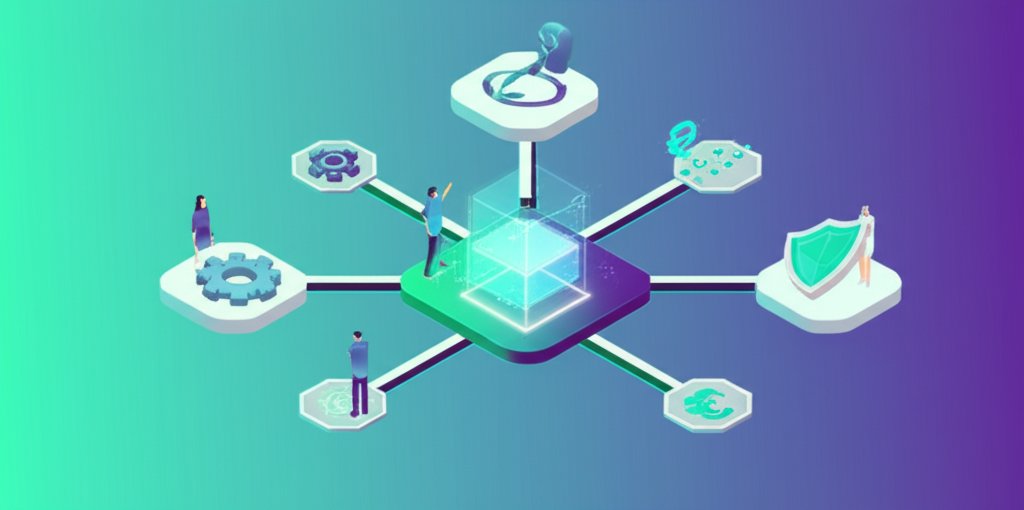
At its heart, a utility coin is designed with a singular purpose: to provide access. Unlike general-purpose cryptocurrencies like Bitcoin, which primarily function as digital money, utility coins (and their close relatives, utility tokens) are the operational currency within a specific decentralized application (dApp) or blockchain network. Think of them less as cash and more as a ticket, a license, or a specific-use credit that allows you to perform actions, use features, or gain benefits within a particular ecosystem.
While the terms "utility coin" and "utility token" are often used interchangeably in everyday conversation, there's an important technical distinction:
- A utility coin operates on its own native blockchain, acting as the fundamental asset and often the gas fee for that network. It can also function as a medium of exchange within that native chain.
- A utility token, conversely, is built on an existing blockchain ecosystem, like Ethereum or Solana. It doesn't have its own native chain but leverages the security and infrastructure of its host. The vast majority of practical examples you'll encounter fall into the utility token category, as they extend the functionality of a larger network rather than building a new one from scratch. For the purpose of providing access to services, their utility function is remarkably similar, which is why we'll refer to them broadly as "utility coins" in this guide, acknowledging this nuanced technical difference.
These assets derive their value not from being a standalone currency, but from the demand for the services or products they unlock. If a service is valuable and widely adopted, the utility coin associated with it naturally sees increased demand.
Fueling the Ecosystem: How Utility Coins Grant Access
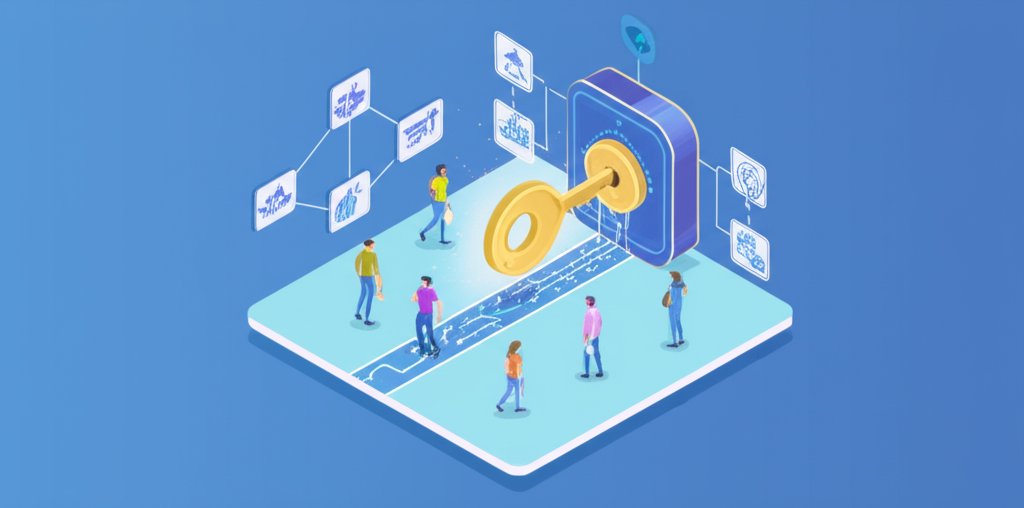
The mechanisms through which utility coins grant access are varied, but they all boil down to enabling interaction with specific blockchain-powered services. Here's a breakdown of common methods:
Direct Payments for Services
This is perhaps the most straightforward use case. Users pay a specific amount of utility coin to access a service. This payment might cover data storage, computational power, or a transaction fee for interacting with a dApp. The value of the coin is directly tied to the cost of that service.
Case Snippet: Decentralized Storage with Filecoin (FIL)
If you need to store files securely and immutably on a decentralized network, you'd turn to Filecoin. To use its services—renting storage space from a global network of computers—you must pay in FIL tokens. The more storage you need, or the longer you need it, the more FIL you'll expend. This creates a direct economic link: demand for decentralized storage drives demand for FIL.
Staking for Service Provision or Access
Many utility coin projects incorporate staking mechanisms. Staking involves locking up a certain amount of the utility coin to gain access to premium features, earn rewards, or even become a service provider within the ecosystem. This incentivizes holding the coin and contributes to network security or service quality.
Case Snippet: The Graph (GRT) - The "Google of Web3"
The Graph indexes and organizes blockchain data, making it easily queryable for dApps. To participate as an "Indexer" – someone who processes and serves this data – you must stake GRT tokens. This stake acts as collateral, ensuring you provide accurate and reliable data. dApps then pay GRT to these Indexers for their services, creating a self-sustaining economic loop where staking enables service provision and GRT facilitates payment.
Governance and Voting Rights (Indirect Access)
While governance tokens explicitly focus on voting, some utility coins offer a degree of governance power as an added benefit. Holding or staking these coins might give you a say in protocol upgrades, fee structures, or community decisions, indirectly granting access to influence the future direction of the services you use. This differs from dedicated governance tokens, where voting is the primary function; here, it's a secondary utility layered on top of core service access.
Discounts, Rewards, and Feature Unlocks
Some projects use utility coins to create tiered access or to reward loyal users. Holding a certain amount might give you discounts on transaction fees, early access to new features, or a share of protocol revenue. This encourages active participation and long-term engagement.
Case Snippet: PepeX (PEPEX) Launchpad
A platform like PepeX, which acts as a launchpad for meme tokens on Solana, uses its PEPEX token to grant access to premium features. Holders might receive discounts on launch fees, early access to new projects, or even a share of the platform's revenue through staking mechanisms. This incentivizes users to acquire and hold PEPEX to maximize their benefits on the platform.
Burning Mechanisms
In some ecosystems, utility coins are "burned" (permanently removed from circulation) when used to access a service or as part of protocol fees. This deflationary mechanism can reduce the total supply over time, potentially increasing the value of remaining coins if demand for the underlying services remains strong.
Case Snippet: CartelFi (CARTFI)
CartelFi aims to bridge meme coin liquidity into DeFi pools. A portion of the protocol's fees are used to buy back CARTFI tokens from the market and then burn them. This constant reduction in supply, driven by platform usage, is designed to make CARTFI a deflationary asset, rewarding long-term holders as the ecosystem grows.
Evaluating a Utility Coin: Beyond the Hype
With thousands of crypto projects, distinguishing genuine utility from speculative hype is critical. Here's how to evaluate a utility coin:
1. Identify the Core Problem it Solves
A strong utility coin is tied to a project that addresses a real-world problem or a significant pain point within the blockchain ecosystem.
- Is it offering decentralized storage (Filecoin) because centralized solutions have issues?
- Is it enabling efficient blockchain data querying (The Graph) because direct access is complex?
- Does it facilitate fair ad revenue distribution (Basic Attention Token) to address opaque ad models?
If the problem isn't clear or compelling, the utility coin's long-term value is questionable.
2. Understand the Demand Cycle
For a utility coin's value to grow, there needs to be a continuous demand for the services it unlocks. This means assessing:
- Protocol Fees: Do users pay for services in the native utility coin? If so, these fees drive constant demand.
- Staking Incentives: Does staking the coin unlock significant benefits (e.g., higher APR, exclusive features, service provider roles)? This incentivizes holding.
- Burning Mechanisms: Are coins removed from circulation through usage? This creates scarcity.
A healthy demand cycle ensures that as the ecosystem grows, so does the demand for its associated utility coin.
3. Assess Adoption and Traction
Concrete data speaks louder than promises. Look for:
- Total Value Locked (TVL): For DeFi-related utility coins, TVL indicates how much capital is actively engaged with the protocol.
- Protocol Fees Generated: This shows real usage and economic activity.
- Active Users/Wallets: Growing user bases signal increasing demand for services.
- Integration with Other Projects: If other dApps and protocols are building on or integrating a service (e.g., Aave and Synthetix using Chainlink's oracles), it validates its importance.
These metrics offer a clear picture of whether the utility is genuinely being utilized. Many utility tokens, especially, live on the Ethereum blockchain, so tracking Ethereum's ecosystem health and activity can provide broader context. For a deeper dive into how different crypto assets drive the blockchain economy, you might find our main [Utility Crypto Coins Guide](Utility Crypto Coins Guide) helpful.
4. Regulatory Clarity (or Lack Thereof)
The regulatory landscape for crypto is still evolving. Utility tokens, especially those issued via Initial Coin Offerings (ICOs), have historically faced scrutiny from regulators like the SEC. While utility tokens are designed for consumption of services (unlike governance tokens which grant voting rights akin to shares), the line can sometimes blur. Be aware that regulatory uncertainty can pose significant risks.
5. Team and Technology
Even the best idea needs solid execution. Research the development team's experience, their roadmap, and the underlying technology's robustness. A project with a strong, transparent team and a technically sound solution is more likely to deliver on its promises of utility.
Practical Playbook: Leveraging Utility Coins
For users, developers, or even curious observers, here’s how to approach utility coins:
- Define Your Needs: What blockchain service are you trying to access or provide? Storage? Compute power? Data indexing? Identity verification? This will narrow down your search.
- Research the Ecosystem: Once you identify a promising utility coin, spend time understanding its ecosystem. Read their whitepaper, check their community forums, and follow their social media channels. How active is the development? What are the key partnerships?
- Evaluate the Tokenomics: Look at the supply (fixed vs. inflationary/deflationary), distribution model, and how the utility coin integrates into the economic model of the project (fees, staking, burning). Does the model incentivize holding and using the coin?
- Start Small: If you're looking to acquire utility coins for access, begin with a small amount to familiarize yourself with the process. Use the service as intended. This hands-on experience is invaluable.
- Monitor Adoption: Keep an eye on the project's real-world usage metrics. Is the TVL growing? Are transaction fees increasing? Are new integrations being announced? These are positive indicators of sustained utility and demand.
- Be Wary of "Vaporware": Many projects promise revolutionary utility but fail to deliver a working product. Prioritize projects with demonstrable products, not just concepts.
Quick Answers: Common Questions About Utility Coins
What's the main difference between a utility coin and a security token?
A utility coin (or token) is primarily designed to provide access to a specific product or service within a blockchain ecosystem. Its value comes from its use. A security token, on the other hand, represents ownership in an underlying asset, like real estate, company shares, or a revenue share, and is subject to securities regulations. The key difference lies in their function and regulatory classification.
Can utility coins be mined?
Generally, no. Most utility tokens are created all at once and distributed according to the creators' plan, often through an Initial Coin Offering (ICO). Some utility coins (native to their own blockchain) might be mineable if their network uses a Proof-of-Work consensus mechanism, but this is less common for "access-driven" utility compared to foundational cryptocurrencies.
Is investing in utility coins risky?
Yes, highly. While they offer the potential for significant returns if the underlying service gains widespread adoption, they also carry high risks. These include regulatory uncertainty, the potential for project failure (resulting in loss of investment), and market volatility. Many utility coin projects have failed to deliver on their promises or build sufficient demand.
How do utility coins get their value?
Their value is primarily derived from the demand for the specific products or services they unlock. If a service is unique, efficient, and widely adopted, the utility coin required to access it becomes more valuable. Factors like fee structures, staking incentives, and token burn mechanisms can also contribute to a utility coin's appreciation by creating consistent demand and limiting supply.
Are all utility coins built on Ethereum?
No, while a significant number of utility tokens currently run on the Ethereum blockchain due to its robust ecosystem and developer tools, many are also built on other platforms like Solana, Polygon, Binance Smart Chain, and others. Some utility coins, as mentioned, even operate on their own native blockchains.
Beyond Speculation: A Path to Deeper Engagement
Utility coins represent a pivotal shift from merely holding crypto to using it. They are the gears and levers that make the blockchain engine run, powering everything from decentralized cloud storage to fair advertising models. By understanding their core function—providing access to specific services within their crypto ecosystems—you gain a clearer perspective on the true innovation happening in Web3. This knowledge equips you to move beyond market noise and identify projects that are building genuine value, whether you're looking to simply use a service, contribute to a decentralized network, or strategically navigate this rapidly evolving digital frontier.