When the early days of Bitcoin mining allowed a simple personal computer to net significant returns, the usb crypto miner emerged as a compact, seemingly revolutionary tool. Today, the dream of easy Bitcoin profits from a USB stick has evaporated, crushed by an exponentially growing network difficulty. Yet, the spirit of low-cost, accessible mining hasn't died; it's evolved, transforming the humble USB miner into a fascinating entry point for "Bitcoin lottery mining"—a high-stakes, low-odds gamble for the dedicated hobbyist.
This isn't about predictable income; it's about the thrilling, almost impossible pursuit of a full block reward. For those intrigued by the inner workings of Bitcoin, who relish a long shot, the modern usb crypto miner offers a unique, educational, and surprisingly energy-efficient way to participate.
At a Glance: Bitcoin Lottery Mining for Hobbyists
- What it is: A solo attempt to find a Bitcoin block, offering a tiny chance at the full block reward (3.125 BTC in 2025).
- Why it exists: Traditional USB mining for profit is obsolete due to immense network difficulty, making lottery mining a low-cost, high-reward gamble.
- Who it's for: Tech enthusiasts, educators, and hobbyists who enjoy the concept more than expecting financial returns.
- Key devices: Specialized hardware like WooMiner, NerdMiner, and NerdNos, designed for efficiency and low power use.
- Setup: Relatively simple, involving connecting the miner to a powered USB hub, installing software, and configuring for solo operation.
- The Upside: Low energy consumption, a deep dive into Bitcoin mechanics, and the remote possibility of a life-changing win.
The Grand Shift: From Predictable Pennies to Lottery Dreams
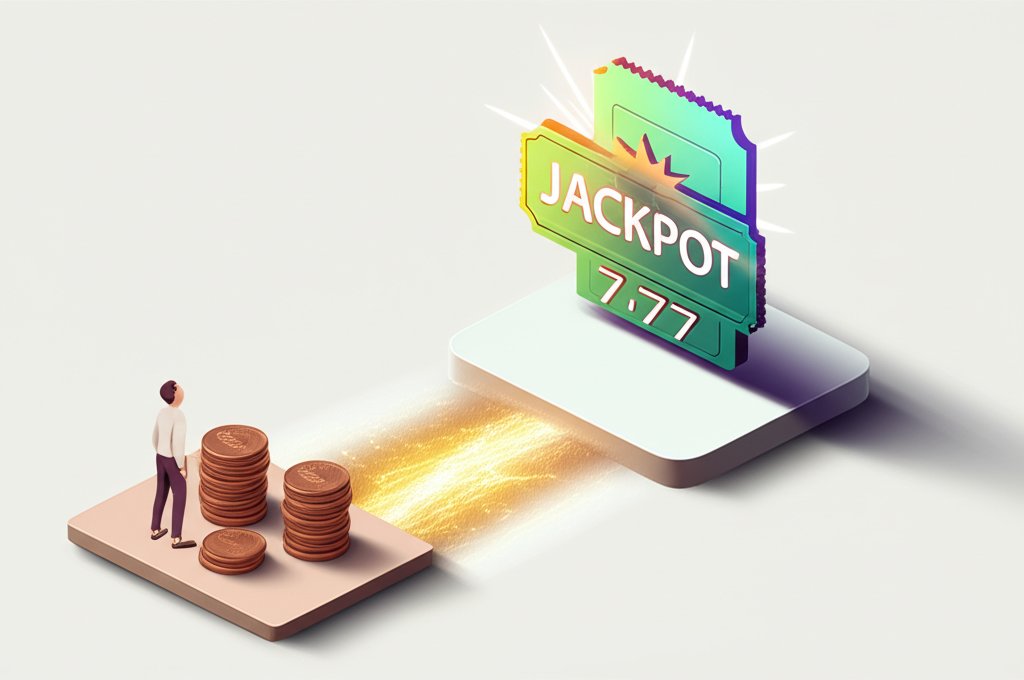
A few years ago, plugging in a usb crypto miner might have yielded a small, consistent trickle of Satoshis by joining a mining pool. These devices, capable of a few hundred Giga-hash per second (GH/s), offered a tangible, albeit tiny, return. Today, the Bitcoin network's difficulty has skyrocketed to such an extent that industrial-scale mining operations now boast thousands of Tera-hash per second (TH/s)—millions of times more powerful than any USB stick could ever hope to be. This massive disparity means that for anyone hoping to earn a reliable income, traditional USB mining has become spectacularly unprofitable. If you're wondering why these small devices can no longer compete in the conventional sense, understanding the sheer scale of modern mining operations and network difficulty is crucial. You can dive deeper into that economic reality by reading Why USB Miners Are Unprofitable.
This isn't to say USB miners are useless; rather, their purpose has pivoted dramatically. Instead of chasing consistent, meager payouts, they're now embraced for "Bitcoin lottery mining." This isn't about pooling resources for a steady stream of small gains. It's about a single miner, armed with a modest usb crypto miner, going it alone, hoping to be the one in a billion who solves a block entirely on their own.
Understanding the Odds: Hash Rate Versus Network Difficulty
The core principle of Bitcoin mining boils down to a race: your machine's 'hash rate' (its processing power) against the network's 'difficulty' (how hard it is to find a block). Every roughly ten minutes, the Bitcoin network presents a new block to be solved. The first miner to find the solution gets the entire block reward, which in 2025, stands at 3.125 Bitcoin.
Imagine a global lottery where every participant is trying to guess a specific number. The more guesses you can make per second (your hash rate), the higher your chances. However, the number of tickets sold globally is astronomical, representing the collective hash rate of every miner on Earth. Your usb crypto miner, producing maybe 78 Kilo-hash per second (KH/s) or even 130 GH/s, is like buying one lottery ticket among billions. Industrial mining farms are buying millions of tickets every second.
This stark reality means that in direct competition, a usb crypto miner has virtually zero chance of winning. However, "virtually zero" isn't "absolutely zero." Every block found is a random event, and even the smallest hash rate has a chance, no matter how infinitesimal. This is the allure of the lottery: the odds are stacked against you, but the payoff is immense if you beat them.
The Two Paths for Small-Scale Mining: Pool vs. Solo
For those with limited mining power, two primary strategies emerged:
- Mining Pool Participation: This is the traditional approach. Miners combine their computational power with others in a "pool." When the pool collectively solves a block, the reward is split proportionally among all participants based on their contribution. This offers small, consistent payouts, making it a viable, albeit low-profit, option for some small-scale operations like the GekkoScience Compac F, which might net around $0.251 daily (with a nearly 1.5-year return on investment, at current difficulty and price).
- Solo (Lottery) Mining: This is the path the modern
usb crypto minerhas embraced. Here, you're not sharing your hash rate with a pool. You're working entirely alone, directly against the Bitcoin network's difficulty. If you succeed in finding a block, you keep the entire 3.125 BTC reward. This transforms mining from a consistent, if tiny, income stream into a low-cost, high-stakes gamble with a potentially life-changing payout. Each new block presented every ~10 minutes offers another fresh opportunity for your little miner to get lucky.
Dedicated Hardware for the Hunt: Modern USB Crypto Miners
The shift to lottery mining has spurred the development of specialized usb crypto miner devices. These aren't just generic Bitcoin miners scaled down; they're designed with hyper-efficiency and simplicity in mind, understanding their role as lottery tickets, not profit centers. Their price tags typically range from an accessible $17 to over $600, depending on the hash rate and features.
Let's look at a few examples:
- WooMiner BTC Solo Miner: Built on the popular Nerdminer platform, this device epitomizes lottery mining. It's engineered for maximum efficiency, offering silent operation and incredibly low power consumption (often under 0.575W, translating to less than 0.5 kWh per month). Its minimal power draw makes it an ideal "set-it-and-forget-it" lottery ticket.
- NerdMiner: One of the pioneers in this space, a standard NerdMiner typically operates around 78 KH/s with a power consumption of about 1.6W. It's often open-source or based on easily available components, making it popular for DIY enthusiasts.
- NerdNos: Stepping up the game slightly, the NerdNos incorporates a more powerful ASIC chip, often the BM1397 (found in much larger miners). This allows it to achieve hash rates between 80-130 GH/s, albeit with slightly higher power consumption of 7-8 watts. For the lottery miner, this increased hash rate translates to a marginally (but still infinitesimally small) better chance of winning.
These devices are about optimizing for the chance of a win while keeping operational costs almost negligible. They don't generate enough heat to be a concern, and their power draw is less than many common household electronics.
Setting Up Your USB Crypto Miner for the Lottery: A Practical Playbook
Getting your usb crypto miner up and running for solo lottery mining is a straightforward process, largely accessible even for beginners. It focuses on stability, power delivery, and correct software configuration.
1. Choosing Your Lucky Charm
First, decide on your miner. Are you prioritizing ultra-low power and silence (like a WooMiner or basic NerdMiner), or do you want a slightly higher hash rate with a minimal power bump (like a NerdNos)? Research available models and their reported hash rates and power draw. Remember, even a 100x difference in GH/s barely moves the needle in terms of winning odds but can impact your initial cost.
2. Powering Your Device
USB miners are small, but they still need stable power. Most computers' USB ports provide limited power, which can be insufficient for optimal performance or for running multiple miners.
- Use a Powered USB Hub: This is crucial. A dedicated, externally powered USB hub (one with its own power adapter) ensures each
usb crypto minerreceives consistent and sufficient power. This prevents instability, reboots, and potential damage. Look for hubs with individual port power switching or strong reviews for power delivery. - Avoid Daisy-Chaining: Don't plug one hub into another, or miners directly into unpowered hubs.
3. Software Installation: The Brains Behind the Brute Force
Your computer acts as the controller for your usb crypto miner. You'll need specific software to communicate with the miner and the Bitcoin network.
- cgminer: This is the most common and robust mining software. It's command-line based but provides excellent control and support for various ASIC miners, including most USB models. Download the latest stable version for your operating system (Windows, Linux, macOS).
- Zadig winUSB Drivers (for Windows users): If you're on Windows, you'll likely need Zadig to install the correct WinUSB drivers for your
usb crypto miner. This allows cgminer to "see" and interact with your USB device. The process involves selecting your miner from Zadig's device list and installing the WinUSB driver. - Operating System: While Windows works, many hobbyists prefer Linux (e.g., Raspberry Pi OS on a Raspberry Pi) for its stability, low resource usage, and command-line friendliness, which pairs well with cgminer.
4. Configuration: Pointing Towards the Prize
This is where you tell cgminer what to do. For solo lottery mining, the configuration is simpler than for pool mining.
- Create a Configuration File: Instead of typing long commands, create a text file (e.g.,
start_miner.batfor Windows orstart_miner.shfor Linux) containing your cgminer command. - Target the Bitcoin Network: You'll point your miner directly at a Bitcoin node (or a publicly available solo mining proxy) that connects to the main Bitcoin network. This means you'll need the IP address and port of a suitable node. Sometimes, a dedicated solo mining pool might also offer this configuration, allowing you to mine solo but use their network connection.
- Example cgminer Command (Adjust as needed):
bash
cgminer --bmsc-options 110:100:1 --nocheck-golden --compact-freq 220 --api-listen --url stratum+tcp://solo.ckpool.org:3333 --user YOUR_BTC_WALLET_ADDRESS.workername --pass x --bmsc-options 110:100:1: Specific options for certain USB miners.--nocheck-golden,--compact-freq 220: Further miner-specific optimizations.--api-listen: Allows monitoring.--url stratum+tcp://solo.ckpool.org:3333: This points to a solo mining pool that acts as a proxy for the Bitcoin network. You're still mining solo, but using their server to relay your work to the network. Crucially, replace this URL if your chosen node/proxy differs.--user YOUR_BTC_WALLET_ADDRESS.workername: Your Bitcoin wallet address where any winning reward would be sent, followed by an optional worker name. ReplaceYOUR_BTC_WALLET_ADDRESSwith your actual Bitcoin address.--pass x: Standard password for most solo setups.- Save and Run: Save the file and then run it. You should see cgminer initialize, detect your
usb crypto miner, and start hashing.
5. Keeping Your Miner Cool and Stable
While usb crypto miner devices are low-power, they can still benefit from optimal thermal management, especially if running 24/7.
- Active Cooling: A small USB fan blowing directly over the miner can help maintain stable temperatures and potentially extend its lifespan.
- Stable Environment: Keep your setup in a cool, dust-free environment. Avoid direct sunlight or cramped spaces that restrict airflow.
Quick Answers: Demystifying USB Crypto Miner Lottery Mining
Q: Can I actually make money with a USB crypto miner in 2024/2025?
A: Realistically, no. Traditional mining for profit with these devices is impossible due to network difficulty. Lottery mining offers an extremely remote chance of a large payout, akin to winning a literal lottery. It's a hobby, not an investment for predictable returns.
Q: How much electricity does a USB crypto miner use?
A: Very little. Most modern lottery miners consume less than 1-8 watts, often less than a typical LED light bulb. Running one 24/7 will add mere cents to a few dollars to your monthly electricity bill, making it one of the most energy-efficient ways to participate in Bitcoin mining.
Q: Why would anyone bother with Bitcoin lottery mining if the chances are so small?
A: Several reasons:
- Education: It's an excellent hands-on way to learn about Bitcoin's proof-of-work mechanism, hashing, and the network itself.
- Hobby/Challenge: For tech enthusiasts, it's a fun project, a tangible piece of the Bitcoin ecosystem.
- The Thrill: The infinitesimal chance of winning 3.125 BTC is a powerful, low-cost thrill, much like buying a lottery ticket.
- Low Risk: The financial outlay for the device and power is minimal.
Q: What happens if my USB crypto miner actually finds a block?
A: If your miner is configured correctly with your Bitcoin wallet address, the full block reward (3.125 BTC in 2025) would be sent directly to your wallet. This is why having a secure, personal Bitcoin wallet is paramount.
Q: Do I need a powerful computer to run a USB crypto miner?
A: No. The heavy lifting (hashing) is done by the USB miner itself. Your computer merely acts as a controller, sending instructions and receiving data. A low-power device like a Raspberry Pi is perfectly adequate and often preferred for 24/7 operation due to its own low power consumption.
Q: Can I connect multiple USB crypto miners to increase my chances?
A: Yes, you can. Connecting multiple miners to a powered USB hub will increase your total hash rate, thereby slightly improving your already infinitesimal chances of finding a block. However, the gains in probability remain minuscule compared to the overall network difficulty.
The Actionable Close: Embrace the Journey, Not Just the Jackpot
The usb crypto miner of today is a testament to the enduring fascination with Bitcoin. It's a gateway, not to riches, but to understanding. For the tech-savvy, the curious, or those simply captivated by the allure of a one-in-a-billion shot, setting up a small lottery miner is an incredibly low-risk, low-cost endeavor.
It's about the excitement of participating, the satisfaction of building something functional, and the quiet hum of a device diligently trying its luck against the most powerful computing network in the world. So, whether you're a student eager to grasp blockchain fundamentals or a hobbyist dreaming of that elusive jackpot, the modern usb crypto miner offers a unique, tangible connection to the Bitcoin universe. Just remember, it’s the journey of participation that's the true reward, with the distant glint of 3.125 Bitcoin as the ultimate, improbable bonus.