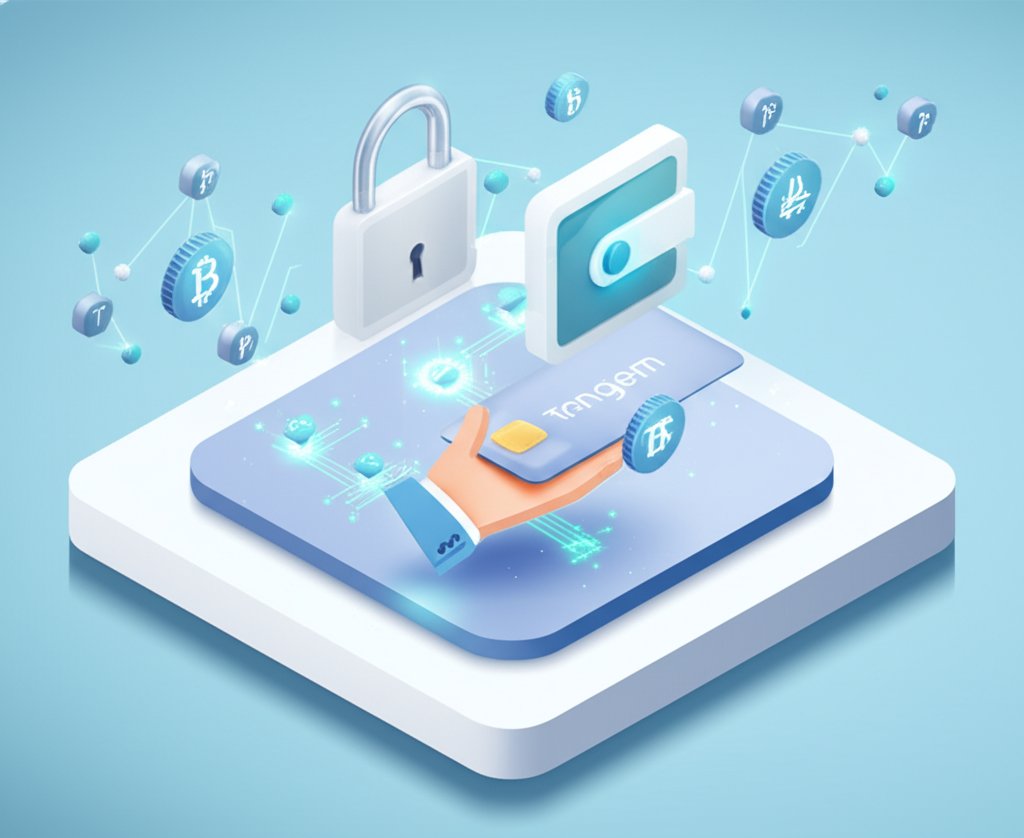
Navigating the world of cryptocurrency can feel like a high-stakes game of digital hide-and-seek. While the allure of decentralized finance is strong, the responsibility of securing your assets falls squarely on your shoulders. That's where hardware wallets come in, and the Tangem Wallet offers a refreshingly unique, card-shaped approach to safeguarding your crypto.
If you've been wondering how to use Tangem Wallet to protect your digital wealth, you've landed in the right place. This guide cuts through the complexity, laying out everything you need to know to set up, use, and master your Tangem Wallet with confidence and peace of mind.
Tangem Wallet: At a Glance
- Form Factor: A credit card-sized hardware wallet that uses NFC.
- Security Core: EAL6+ certified secure chip for offline private key generation and storage.
- Connectivity: Mobile-only, interacts via NFC with Android (v6.0+) or iOS (v14.5+) devices. No USB or Bluetooth.
- Asset Support: Over 6,000 cryptocurrencies across 70+ blockchains.
- Purchase & Backup: Sold in packs of 2 or 3 cards for redundancy; Tangem Ring also available. Always buy from official sources.
- Key Advantage: Your private keys never touch an internet-connected device.
- Warranty: Comes with a 25-year warranty.
The Tangem Difference: Security You Can Hold
Before we dive into the "how-to," it’s worth understanding why Tangem stands out. In a landscape dominated by USB-connected devices or software wallets, Tangem opts for simplicity and robust security, all packed into a durable card.
Imagine your crypto's private key – the secret code that unlocks your funds – living its entire life on a tiny, tamper-proof chip inside a physical card, completely isolated from the internet. This EAL6+ certified secure chip is the heart of Tangem's security. It means your keys are generated offline and remain offline, only interacting via Near Field Communication (NFC) with your smartphone when you need to authorize a transaction. No cables, no batteries, no Bluetooth — just a tap. This minimalist approach drastically reduces attack vectors, making it incredibly difficult for malicious actors to access your private information.
Tangem wallets typically come in packs of two or three cards, or as a wearable Tangem Ring. This isn't just for convenience; it's a built-in redundancy system. Losing one card doesn't mean losing your funds, thanks to the backup cards you link during setup. But here's a crucial first step: always purchase your Tangem Wallet directly from official sources and verify that the packaging seal is intact upon arrival. This ensures you're getting a legitimate device and not a tampered one.
Getting Started: Your First Steps with Tangem
Setting up your Tangem Wallet is designed to be intuitive, bridging sophisticated security with everyday ease of use.
1. Unboxing and Authenticity Check
Once your Tangem Wallet arrives, take a moment to inspect the packaging. Confirm the factory seal is unbroken. This is your first line of defense against supply chain attacks. A compromised seal is a red flag – do not proceed if it looks suspicious.
2. Install the Tangem App
The Tangem Wallet is a mobile-only experience, meaning it relies entirely on its companion app.
- For Android users: You'll need Android v6.0 or higher with NFC capability.
- For iOS users: You'll need iOS v14.5 or higher with NFC capability.
Head to the official Google Play Store or Apple App Store, search for "Tangem," and download the app. Avoid third-party links to ensure you're getting the legitimate software.
3. Create Your Wallet (Private Key Generation)
This is the most critical step, where your private keys are born.
- Open the Tangem app on your smartphone.
- Tap "Scan Card."
- Hold one of your Tangem cards to the NFC reader on the back of your phone. The app will guide you on the exact placement.
- Once scanned, the app will recognize the card. Select "Create Wallet."
- The Tangem card's secure chip will then generate a unique private key pair offline. This process happens entirely within the card, and the keys never leave it.
- You'll be prompted to set up an access code for the app. This can be a PIN or biometric authentication (fingerprint/Face ID). This code protects access to your wallet on your phone – it doesn't directly protect the private keys on the card itself, but it's essential for app security.
Congratulations! You've just created a highly secure, offline hardware wallet.
4. The Crucial Backup Strategy: Linking Your Cards
This is where Tangem's multi-card pack truly shines. Don't skip this step!
- Within the Tangem app, navigate to the settings or wallet management section.
- Look for an option like "Add Backup Card" or similar.
- The app will instruct you to scan your primary card again.
- Next, it will ask you to scan your second (backup) Tangem card. Repeat for a third card if you have one.
- What happens here is ingenious: your backup cards aren't separate wallets. Instead, they are cryptographically linked to the same private key generated on your primary card. This means all cards share the exact same access to your funds.
- Store your backup cards in separate, secure physical locations. This way, if your main card is lost, damaged, or stolen, you can simply use one of your backup cards with the Tangem app to regain immediate access to your assets.
Managing Your Crypto Assets with Tangem
With your wallet set up and backed up, you're ready to start using it for real-world crypto transactions.
1. Adding and Viewing Tokens
Tangem supports over 6,000 cryptocurrencies across more than 70 blockchains. To manage these, you'll need to add them to your app's display.
- In the Tangem app, go to your main wallet view.
- Look for an "Add Token" or "+" symbol.
- Browse or search for the cryptocurrencies you own or wish to receive. Adding them simply makes them visible in your app; it doesn't move funds.
2. Receiving Funds
To receive cryptocurrency into your Tangem Wallet:
- Select the specific token you wish to receive (e.g., Bitcoin, Ethereum).
- Tap "Receive."
- The app will display your wallet address and a QR code for that specific token.
- Carefully share this address or QR code with the sender. Always double-check that the address matches the correct cryptocurrency (e.g., don't send Ethereum to a Bitcoin address). Tangem's design means that while your keys are secure, you still need to be vigilant about address verification.
3. Sending Funds
Sending funds is where your Tangem card's offline signing capability comes into play.
- In the Tangem app, select the cryptocurrency you want to send.
- Tap "Send."
- Enter the recipient's wallet address and the amount you wish to send.
- Review all details carefully (recipient, amount, network fees).
- To authorize the transaction, the app will prompt you to tap your Tangem card to your phone's NFC area one last time. This is the moment your private key on the card cryptographically signs the transaction data, sending it to the blockchain.
- Once signed, the transaction is broadcast to the network. You can track its status within the app or on a blockchain explorer.
4. Buying, Selling, and Swapping Crypto
The Tangem app isn't just for storage; it integrates with popular third-party services to enhance your crypto management.
- Buying Crypto: Services like Simplex allow you to purchase crypto directly within the Tangem app using fiat currency (e.g., USD, EUR) and have it deposited straight into your Tangem Wallet.
- Selling Crypto: While direct selling to fiat might be less common natively, some integrated partners may offer this.
- Swapping Crypto: Tangem Express and Changelly are examples of services integrated for in-app crypto-to-crypto swaps. This lets you exchange one cryptocurrency for another (e.g., Bitcoin for Ethereum) without needing to send funds to an external exchange.
Beyond the Basics: Advanced Tangem Features
As you become more comfortable with your Tangem Wallet, you might explore its capabilities beyond simple storage and transfers.
1. DApp Connectivity with WalletConnect
Decentralized Applications (dApps) are a cornerstone of the Web3 ecosystem, offering everything from DeFi lending to NFT marketplaces. Tangem seamlessly integrates with many dApps through WalletConnect.
- When you're on a dApp's website (e.g., Uniswap, OpenSea, Aave) on your phone or desktop browser, look for a "Connect Wallet" option.
- Choose "WalletConnect."
- A QR code will appear.
- Open your Tangem app and look for the WalletConnect feature (often under a scanner icon or in settings).
- Scan the QR code displayed on the dApp's page with your Tangem app.
- Your Tangem Wallet will then be connected to the dApp. When you initiate a transaction on the dApp (like swapping tokens on Uniswap or bidding on an NFT on OpenSea), the Tangem app will prompt you to authorize it by tapping your Tangem card against your phone. This ensures that even when interacting with dApps, your private keys remain secure on your card.
2. NFTs and Tangem
Tangem supports NFTs, but with a nuance:
- Via WalletConnect: You can use your Tangem Wallet to interact with NFT marketplaces like OpenSea via WalletConnect, signing transactions for purchases, sales, or transfers.
- Native Viewing: Currently, the Tangem app does not natively display your NFTs within its interface. While your Tangem Wallet securely holds the private keys to your NFT assets, you'll need to view them through a connected dApp or a blockchain explorer.
3. The Optional Seed Phrase Export (BIP39)
One feature that sets newer Tangem firmware apart is the optional ability to export a 12 or 24-word BIP39 seed phrase. This is a significant deviation from Tangem's original design philosophy, which intentionally avoided seed phrases to simplify security.
- Why it's Optional: Tangem's core security model relies on the private keys never leaving the secure chip. Exporting a seed phrase introduces a new vector of risk – if that seed phrase is compromised, your funds are at risk.
- How it Works: If you choose to enable this feature (check your app's settings for the option, available on newer firmware), your Tangem card will generate a standard BIP39 seed phrase. You will need to carefully write this down on paper and store it securely offline.
- Implications: Exporting a seed phrase allows for recovery on other compatible wallets (like MetaMask, Trust Wallet, or other hardware wallets). This provides greater flexibility and interoperability, but it also shifts some of the security burden onto you for protecting that seed phrase. If you don't export a seed phrase, your backup cards are your sole recovery mechanism.
Understanding Tangem Security and Recovery
The most sophisticated security is only as good as your understanding of how to use and recover it.
The Power of the EAL6+ Chip
At its core, Tangem's security rests on the EAL6+ certified secure chip embedded in each card. This isn't just a basic chip; it's designed to withstand advanced physical and software attacks. It's purpose-built for cryptographic operations, ensuring:
- Offline Key Generation: Your private keys are created within the chip, never exposed to an internet-connected device.
- Key Isolation: The private keys never leave the secure chip. They are used to sign transactions internally and then the signed transaction is passed to the app, not the key itself.
- Tamper Resistance: The chip is engineered to be highly resistant to physical tampering.
This architecture means that even if your phone is compromised, your private keys on the Tangem card remain secure. The access code you set in the app only protects app access, not the keys themselves.
Recovery Scenarios: What if I Lose My Card?
Tangem offers robust recovery options, provided you've followed best practices.
- Using a Backup Card: This is the primary and most straightforward recovery method. If your main card is lost or damaged, simply use one of your linked backup cards with the Tangem app. Since all linked cards share the same private key, you'll regain immediate access to your funds. This underscores the importance of storing backup cards in separate, secure locations.
- Using an Exported Seed Phrase (If Enabled): If you opted to export a 12 or 24-word BIP39 seed phrase, you can use this phrase to recover your wallet on any compatible software or hardware wallet, not just Tangem. This is a powerful feature for interoperability but remember that you are now responsible for the security of that seed phrase. Keep it offline, away from prying eyes, and ideally in a fire- and water-proof container.
- The Unrecoverable Scenario: This is the scenario you must actively avoid. If all your Tangem cards are lost or destroyed, AND you did not export a seed phrase, your funds will be permanently inaccessible. There is no central recovery service, no "forgot password" button. This emphasizes the critical importance of both having backup cards and understanding your chosen recovery strategy.
Pros and Cons: Is Tangem Right for You?
Every tool has its strengths and weaknesses.
Pros:
- Exceptional Security: EAL6+ secure chip, offline private keys, no internet exposure.
- Unparalleled Ease of Use: Simple NFC tap for transactions, no cables or batteries.
- Durable Design: Waterproof, dustproof, no moving parts.
- Broad Support: Over 6,000 cryptos across 70+ blockchains.
- Built-in Redundancy: Multiple cards provide automatic backups.
- 25-Year Warranty: Assurance of long-term reliability.
Cons: - Mobile-Only: Requires a smartphone with NFC; no desktop application.
- Phone Reliance: Your phone's screen is necessary for interaction.
- Optional Seed Phrase: Seed phrase recovery isn't a default, which might be a pro for some but a con for those who prefer universal recovery standards.
- No Native NFT Viewer: You can store NFTs, but not view them directly in the app.
- Initial Cost: While competitive, buying multiple cards might feel like a higher initial outlay compared to some single-device wallets.
Troubleshooting and Best Practices
Even with a user-friendly device like Tangem, a few tips can enhance your experience and security.
Common Troubleshooting
- NFC Connection Issues: Ensure your phone's NFC is enabled. Try adjusting the card's position on the back of your phone – the optimal spot can vary by device. Remove any thick phone cases that might interfere with the signal.
- App Freezing/Crashing: Ensure your Tangem app and phone's operating system are up-to-date. Try restarting the app or your phone.
- Transaction Delays: Blockchain transaction times can vary. Check a blockchain explorer with your transaction ID to confirm its status. Network congestion can slow things down.
Best Practices for Optimal Security and Use
- Source Your Wallet Wisely: Always buy directly from Tangem's official website or authorized resellers to avoid counterfeit or tampered devices.
- Verify Packaging: Double-check that all seals are intact upon delivery.
- Secure Your Backups: Store your backup Tangem cards in physically separate, secure locations (e.g., a home safe, a trusted friend's home, a bank deposit box).
- Protect Your Seed Phrase (If Exported): If you've opted for seed phrase export, treat it like gold. Never digitize it, photograph it, or store it online. Write it down accurately and store it redundantly and securely offline.
- Set a Strong Access Code: Your app's PIN or biometrics are vital for protecting access to your wallet on your phone.
- Stay Informed: Keep your Tangem app updated to the latest version to benefit from security enhancements and new features. Follow Tangem's official communication channels for important announcements.
- Beware of Scams: Be vigilant against phishing attempts, fake websites, or social engineering scams. Tangem will never ask for your private keys or seed phrase.
- Practice Transactions: If you're new to crypto, start with small, test transactions to familiarize yourself with the process before handling larger amounts.
Embracing Secure Self-Custody with Tangem
Mastering how to use Tangem Wallet is more than just learning a series of steps; it's about embracing a philosophy of self-custody that puts you firmly in control of your digital assets. In a world where digital security threats are constantly evolving, the Tangem Wallet offers a straightforward, robust, and highly secure solution. Its card-like form factor simplifies interaction, while its EAL6+ certified chip provides enterprise-grade protection for your private keys.
By understanding its unique features, diligently setting up your backups, and adhering to best practices, you can confidently navigate the exciting landscape of cryptocurrency, knowing your investments are protected by a device designed for simplicity, durability, and impenetrable security. Your journey to secure self-custody starts here, with a simple tap.